
Inlays and Onlays for Tooth Decay, Infection & Toothache Relief in Sarasota, Gulf Gate Estates & Siesta Key, FL
Gentle Implant, Cosmetic & Restorative Dentistry
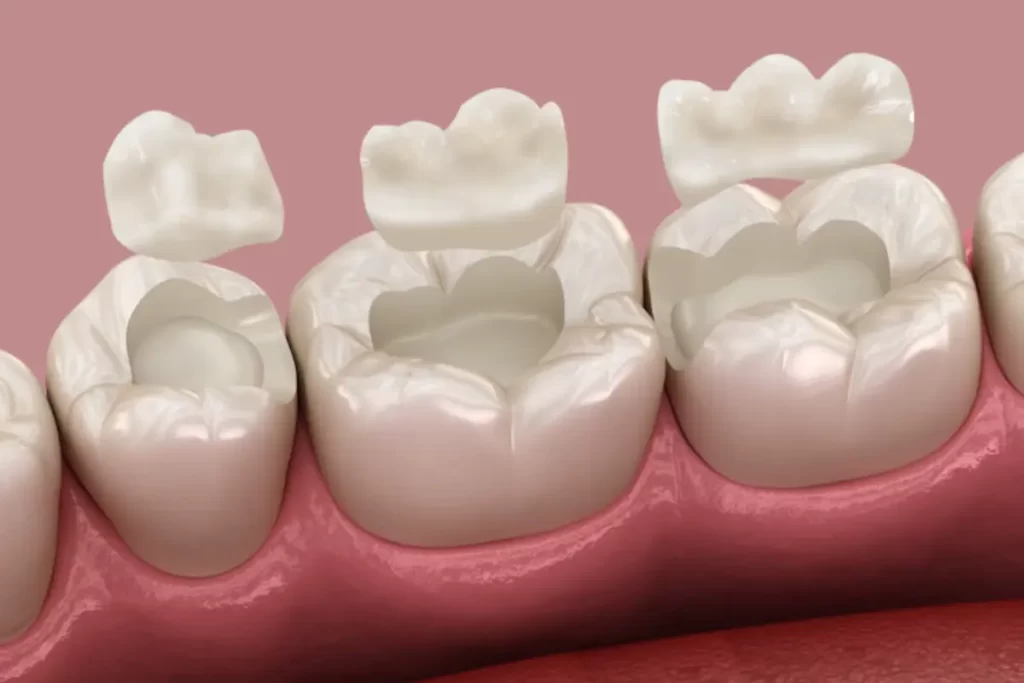
- They are impressively durable, being able to remain sturdy and intact for decades with proper maintenance and care.
- They work to provide strength and stability for the overall structure of the tooth. This is not true for other types of restorations, which may weaken the tooth.
- Inlays and onlays help keep teeth healthy, preventing the need for extensive treatments in the future.
The primary difference between an inlay and an onlay is that an onlay will cover at least one of the tooth’s cusps or points. In some cases, an onlay may cover the tooth’s entire chewing surface. An inlay will only cover the area inside the points. Both inlays and onlays are tightly fitted and secured using a dental adhesive to ensure that they remain steady at all times. Our experts will determine whether an inlay or an onlay is the best way to repair your damaged tooth.
After receiving an inlay or onlay, your tooth should be fully restored and look just like any other healthy, natural tooth. The surface of the tooth may feel somewhat unusual at first, but most patients get used to this in a matter of days. You will be able to use the tooth in the same way that you use all of your other teeth, and you will have no problems chewing any type of food. It is very important that you remember to care for your treated tooth by brushing and flossing regularly so that it remains healthy for many years to come.